BOOK DIRECTLY ON OUR WEBSITE AND ENJOY UP TO 20% DISCOUNT.

BOOK DIRECTLY ON OUR WEBSITE AND ENJOY UP TO 20% DISCOUNT.
Enter the dates
18 September 2026
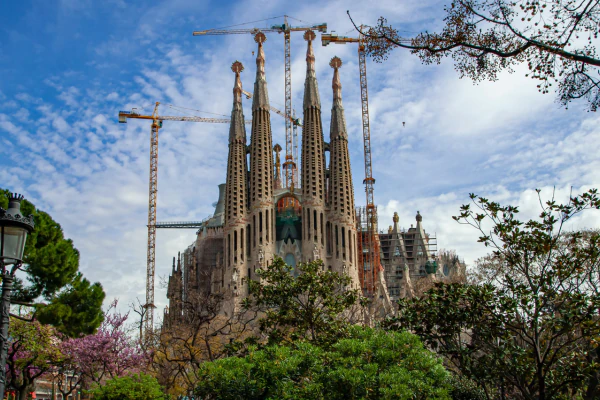
Most visitors to the Sagrada Família crane their necks upward, tracing the towers against the sky, and walk straight past a small stone grid carved into the Passion Façade at eye level. Few stop long enough to add up the numbers. Barcelona works this way in a dozen places: the obvious monument hides a smaller, stranger story that most people miss entirely, tucked into a stained-glass window, a wall still pocked with old bomb fragments, a stone carving above a doorway that has nothing to do with what the building is for. None of it is hidden exactly. It is just easy to overlook when the guidebook has already told you what to look at.
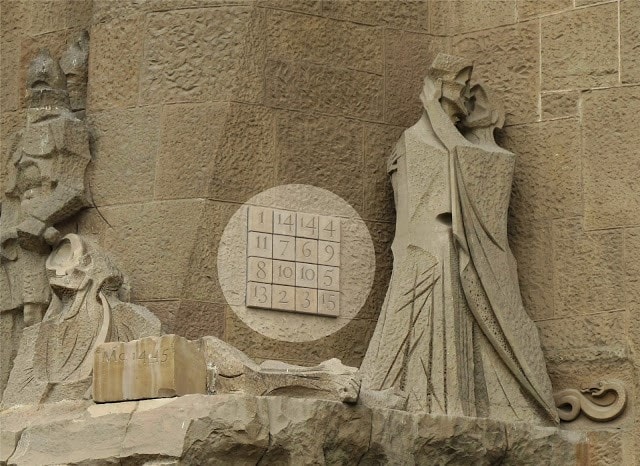
On the Passion Façade of the Sagrada Família, Gaudí’s collaborator Josep Subirachs carved a four-by-four grid of numbers. In a true magic square, every row, column and diagonal adds up to the same total, using each number only once. This one breaks the rule on purpose: the numbers 10 and 14 both appear twice. Add up any line anyway and you get 33, the age most traditions give Christ at his death. It is a flawed square by design, which is arguably more interesting than a perfect one would have been. If the geometry and hidden symbolism of Gaudí’s work has you hooked, Park Güell offers a similarly playful puzzle from higher ground, and it happens to be one of the best viewpoints in the city.
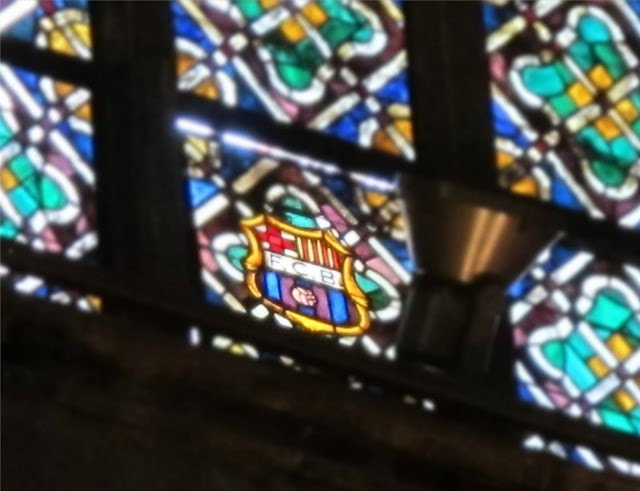
Walk into Santa Maria del Mar, the Gothic basilica in El Born often nicknamed the Cathedral of the Sea, and look up at the stained glass near the altar. Among the saints and coats of arms sits the crest of FC Barcelona. The explanation has nothing to do with football and everything to do with fire: in 1936, an 11-day blaze during the Spanish Civil War destroyed much of the church’s interior, glass included. When the windows were rebuilt in the 1960s, the club helped fund the restoration, and the crest was added as a quiet thank-you. It is easy to confuse this with Barcelona’s main Cathedral a few streets away, which has its own, much larger collection of stained glass but no football crest at all. For more Gothic Quarter history along these same streets, from Roman ruins to the city’s best art collections, our guide to Barcelona’s top museums covers the area in more depth.
A short walk from the Cathedral, the small Plaça de Sant Felip Neri holds one of the city’s quieter memorials. The church façade is scarred with dozens of pockmarks, the scattered scars of shrapnel. On 30 January 1938, a bomb fell on the square, killing 42 people, many of them children sheltering in the church basement. The decision was made afterward never to smooth the wall over. It stands as it was left, a piece of the city’s history that was not softened for visitors.
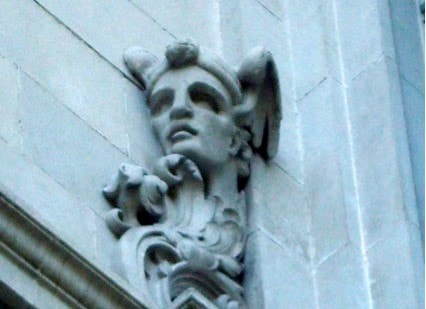
According to a medieval legend with no historical basis whatsoever, Barcelona was founded by Heracles, who arrived while searching for a lost ship from Jason’s fleet and liked the harbour enough to settle there with his half-brother Hermes. The story is almost certainly an invention of a 13th-century bishop looking for a grander origin story than the truth, but it stuck, and Hermes in particular became a recurring motif once the city began building its 19th-century Eixample around trade and commerce. He turns up more often than any other mythological figure in Barcelona: winged sandals, a winged helmet, and his caduceus staff decorate facades across the centre, with close to forty separate carvings on the old Bank of Spain building on Portal de l’Àngel alone. A protector of merchants would have felt right at home in the city’s covered markets, which is where our guide to Barcelona’s best street markets picks up the thread.
One last curiosity, easy to miss even by locals: on the corner of Carrer del Bisbe, right by the Cathedral’s Santa Llúcia chapel, a thin stone rod is carved directly into the wall. Nobody has ever fully explained it. The most repeated theory is that it served as a measuring reference during the chapel’s 12th-century construction, a kind of stone ruler left behind once the work was done. Other explanations are less convincing, which is part of why it has become a small pilgrimage point for people who like their history slightly unresolved.
None of these five things will appear on a list of Barcelona’s top attractions, and that is precisely why they are worth the detour. They sit inside or beside buildings most visitors already plan to see, which means finding them takes patience rather than extra time. If the weather turns while you are tracing this route through the Gothic Quarter, a few indoor plans with children are a short walk away in most directions. Staying somewhere central, in one of Aspasios’s apartments and boutique hotels, makes it easier to come back to a street or a square a second time, once you know what you are actually looking at.
Rain in Barcelona doesn't have to ruin your trip. Discover CosmoCaixa, the Aquàrium and Planeta Magic, three perfect indoor plans to enjoy with kids.
Discover the best views in Barcelona, from Montjuïc and Park Güell to the Bunkers del Carmel, with tips on how to reach each spot and what to expect.
Discover the sweetest side of Barcelona with our guide to the city’s best ice cream and horchata spots.
Fire, beach and tradition on the shortest night of the year. Your insider guide to Barcelona's Sant Joan.
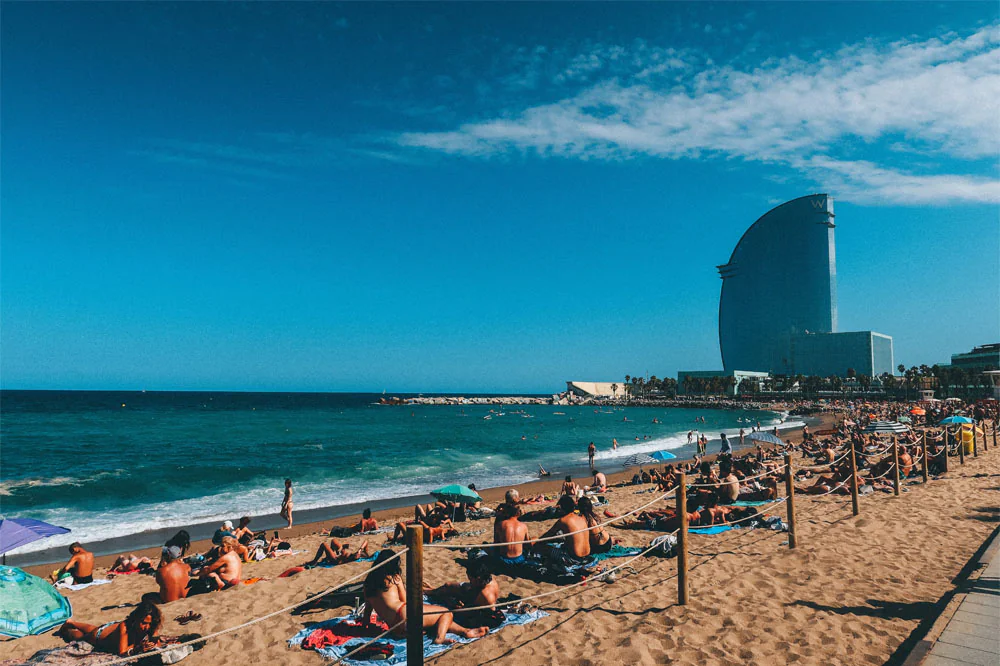
Barcelona comes alive in summer. Here's where to point yourself: beaches, bonfires, open-air theatre, music and the city at its best.
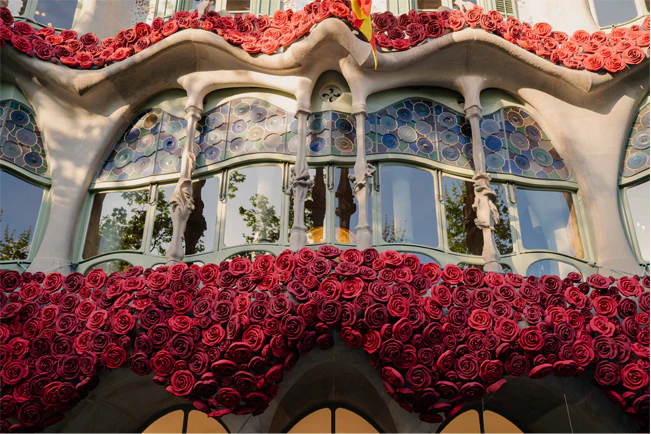
Discover what to do on Sant Jordi Day in Barcelona, from book fairs and roses to cultural spots and the best places to stay.
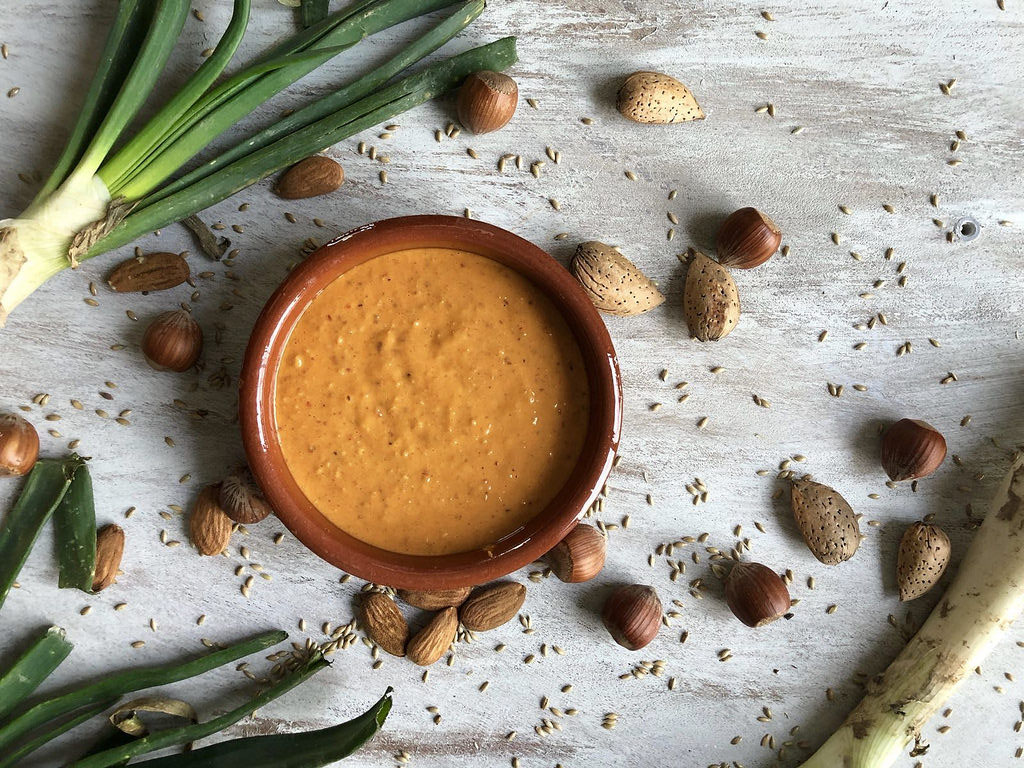
Find out where to enjoy the most delicious calçots in Barcelona. Discover the best restaurants for an authentic calçotada experience this winter!
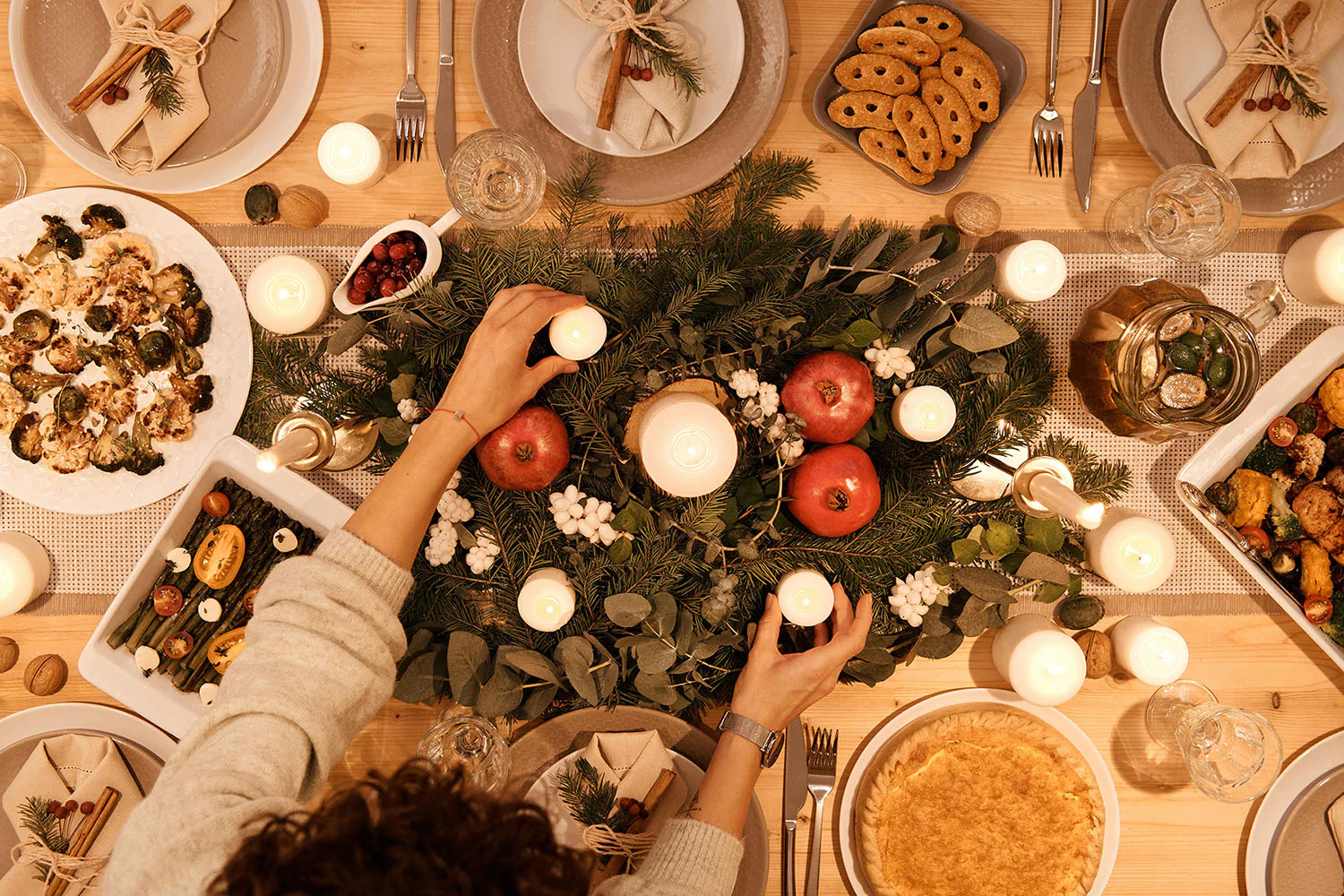
Explore the traditional flavours and festive dishes that make Christmas in Barcelona a delicious seasonal experience.
Autumn in Barcelona combines tradition and fun, from La Castanyada to thrilling Halloween events.
Experience Barcelona from above at the top rooftop terraces with panoramic views.
The 5 best bars to drink vermouth in Barcelona like a local. Terraces, tapas, and tradition in every glass.
Discover Barcelona’s top markets for vintage, design and street food. Unique finds, local flair and the best weekend plans await.
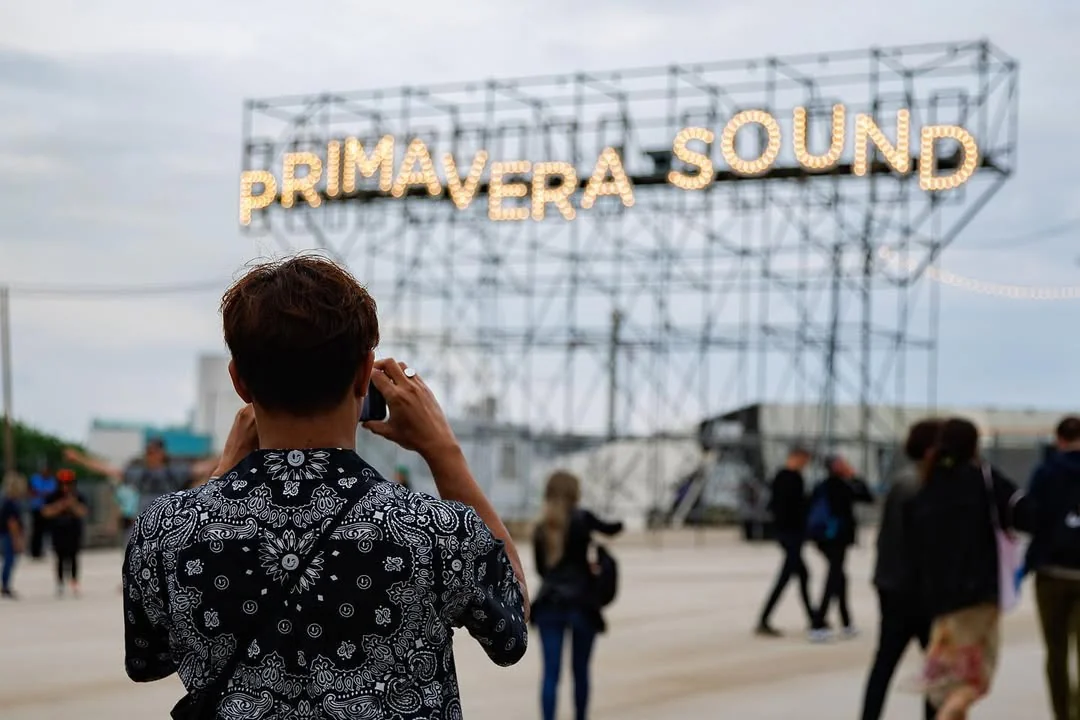
Welcome, music lovers, to one of the most anticipated festivals of the year! Primavera Sound Barcelona 2025 promises an unforgettable experience, blending diverse musical acts with the vibrant culture of the city.
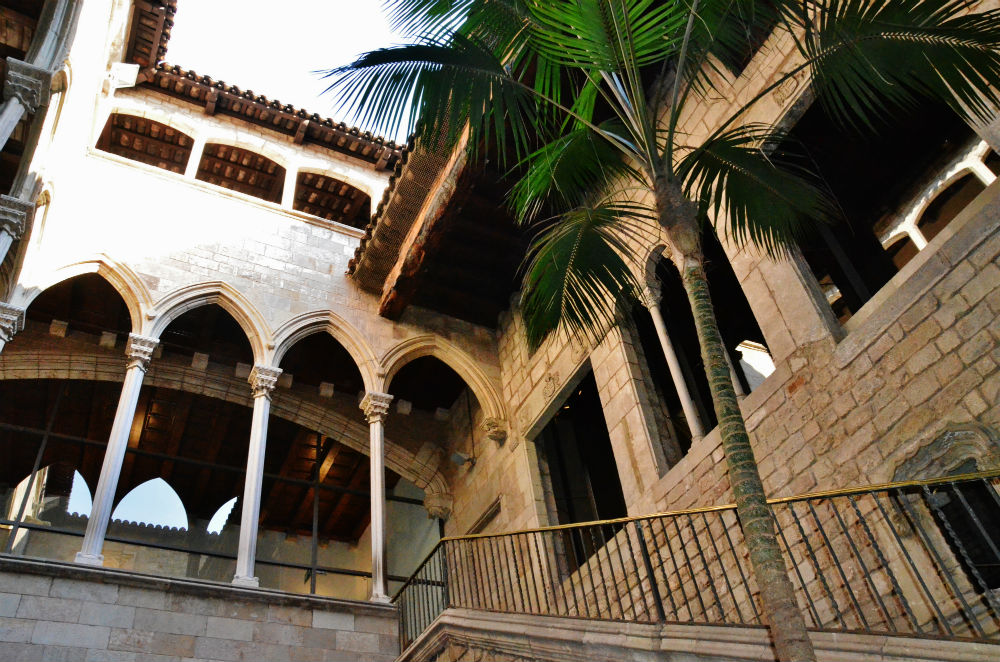
Discover the best museums in Barcelona — from art and design to history and football. Plan a cultural city break with Aspasios.
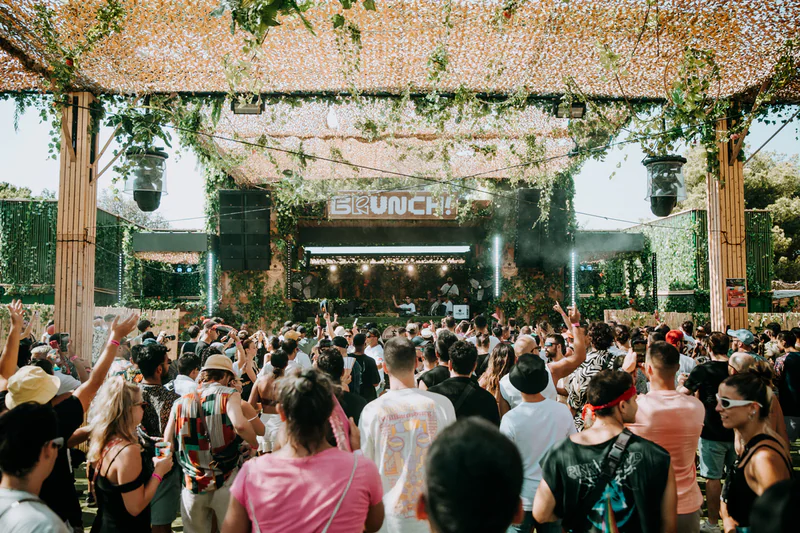
Enjoy Brunch Electronik Barcelona. Sundays filled with electronic music, street food, and a vibrant local vibe in the city’s best open-air venues.
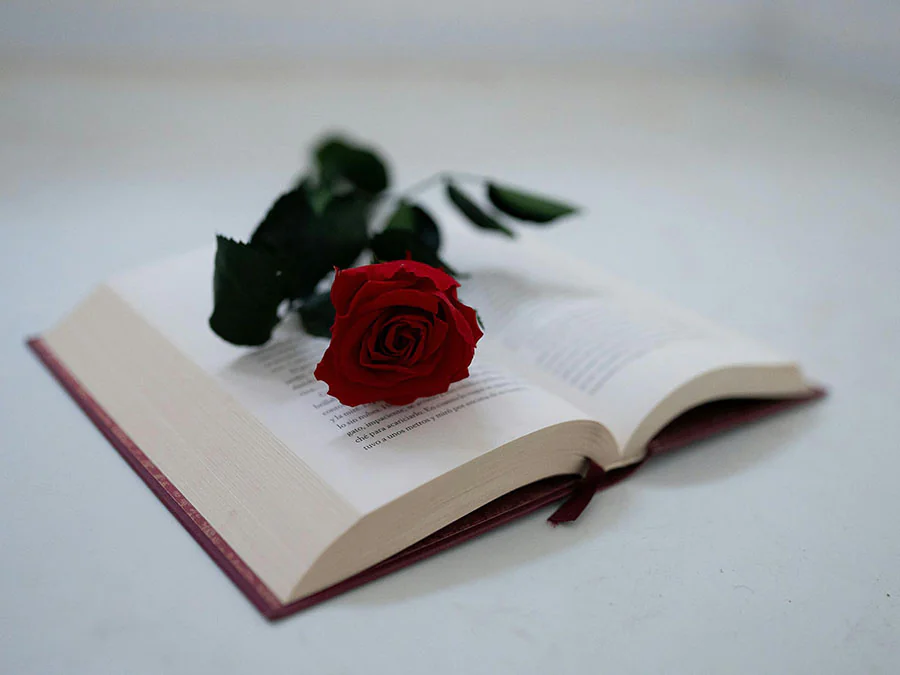
Experience the magic of Sant Jordi in Barcelona, a celebration of love, books, and roses. Discover its origins and top spots to enjoy the festival.
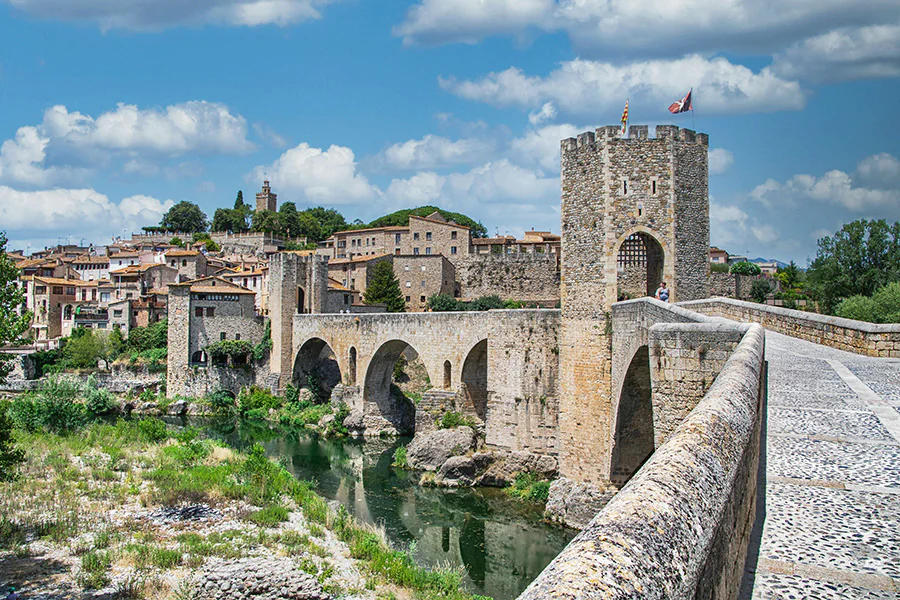
Discover Besalú, a medieval gem near Barcelona, with stone bridges, Catalan cuisine and centuries of history waiting to be explored.

Discover the best places to enjoy nature near Barcelona, from scenic mountains to coastal landscapes. Perfect for hiking and relaxing!
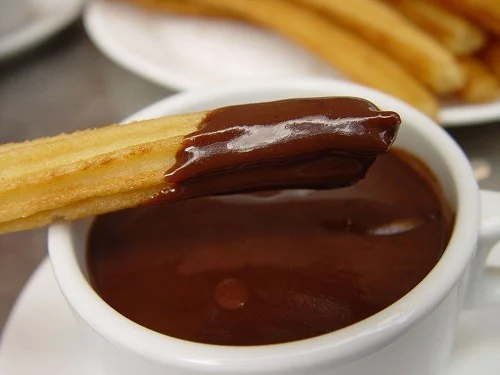
Indulge in Barcelona’s best churros con chocolate! Explore top spots in the city to enjoy this iconic Spanish treat, from classic cafés to gourmet delights.
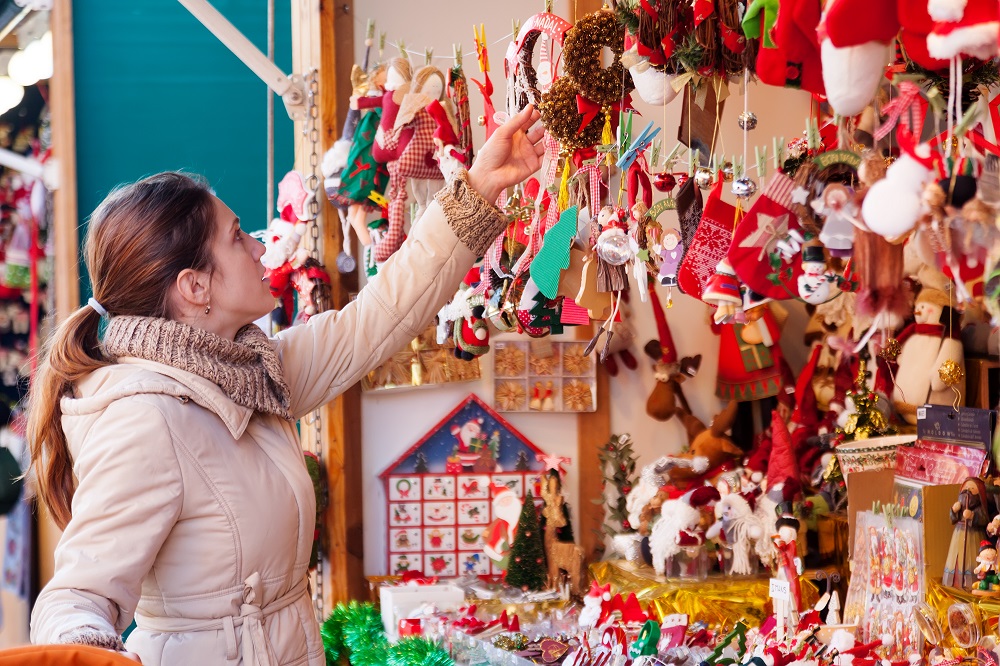
Barcelona celebrates Christmas with unique Catalan traditions, festive markets, delicious local dishes, and joyful events like the Three Kings’ Parade and Copa Nadal. It’s a magical time to experience the city’s culture and holiday spirit.
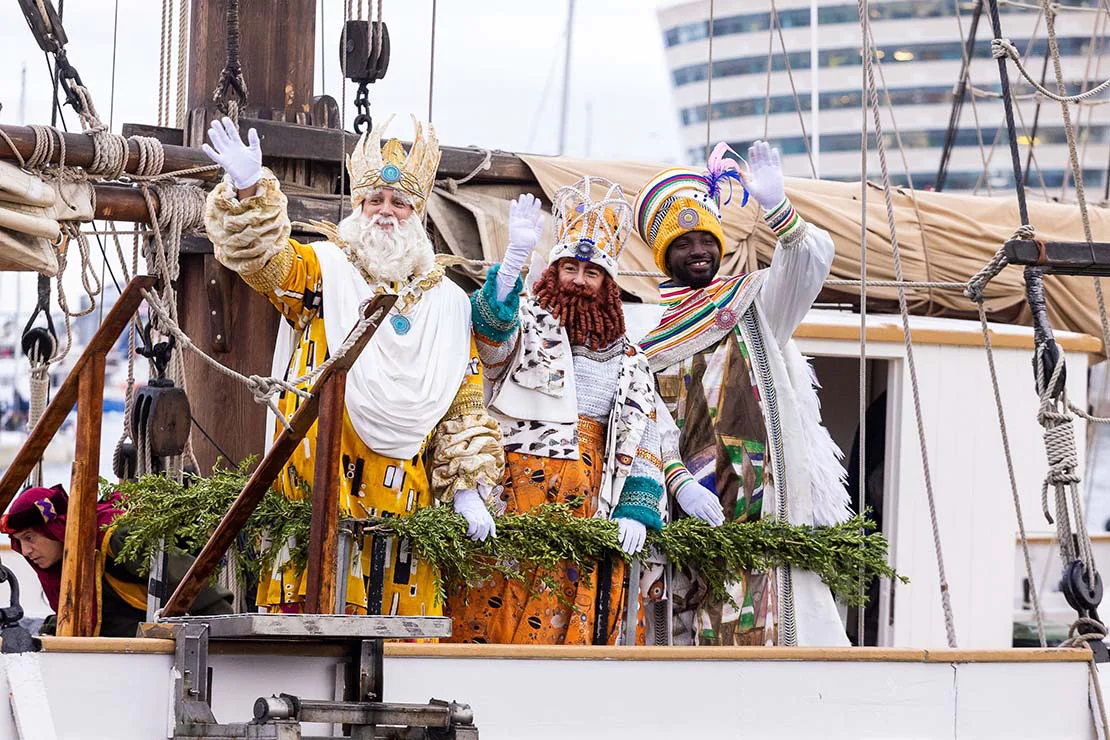
Three Kings' Day in Barcelona is a magical celebration with the spectacular parade, festive markets, and activities for kids. Enjoy nativity scenes and the best Roscón de Reyes while creating unforgettable family memories.
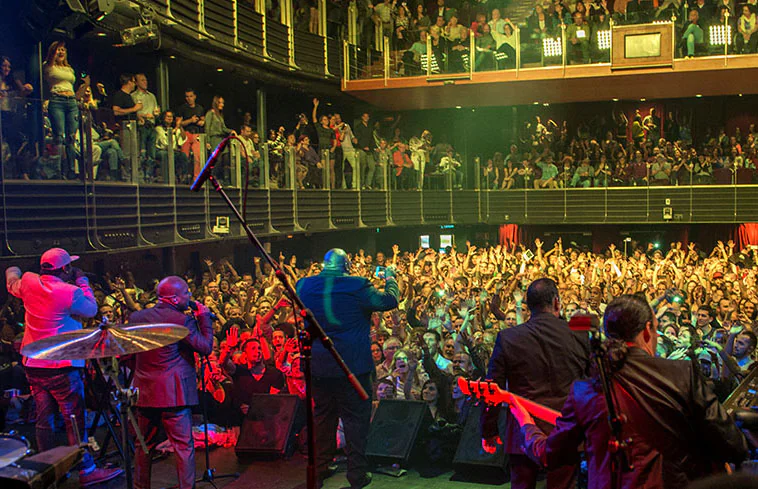
Explore the exciting Jazz Festival in Barcelona, an event that brings together the world’s best jazz talent. Immerse yourself in the city's vibrant music culture.
Experience the magic of cinema in Barcelona from November 4 to 7 with tickets for only €3.50. Don’t miss it!
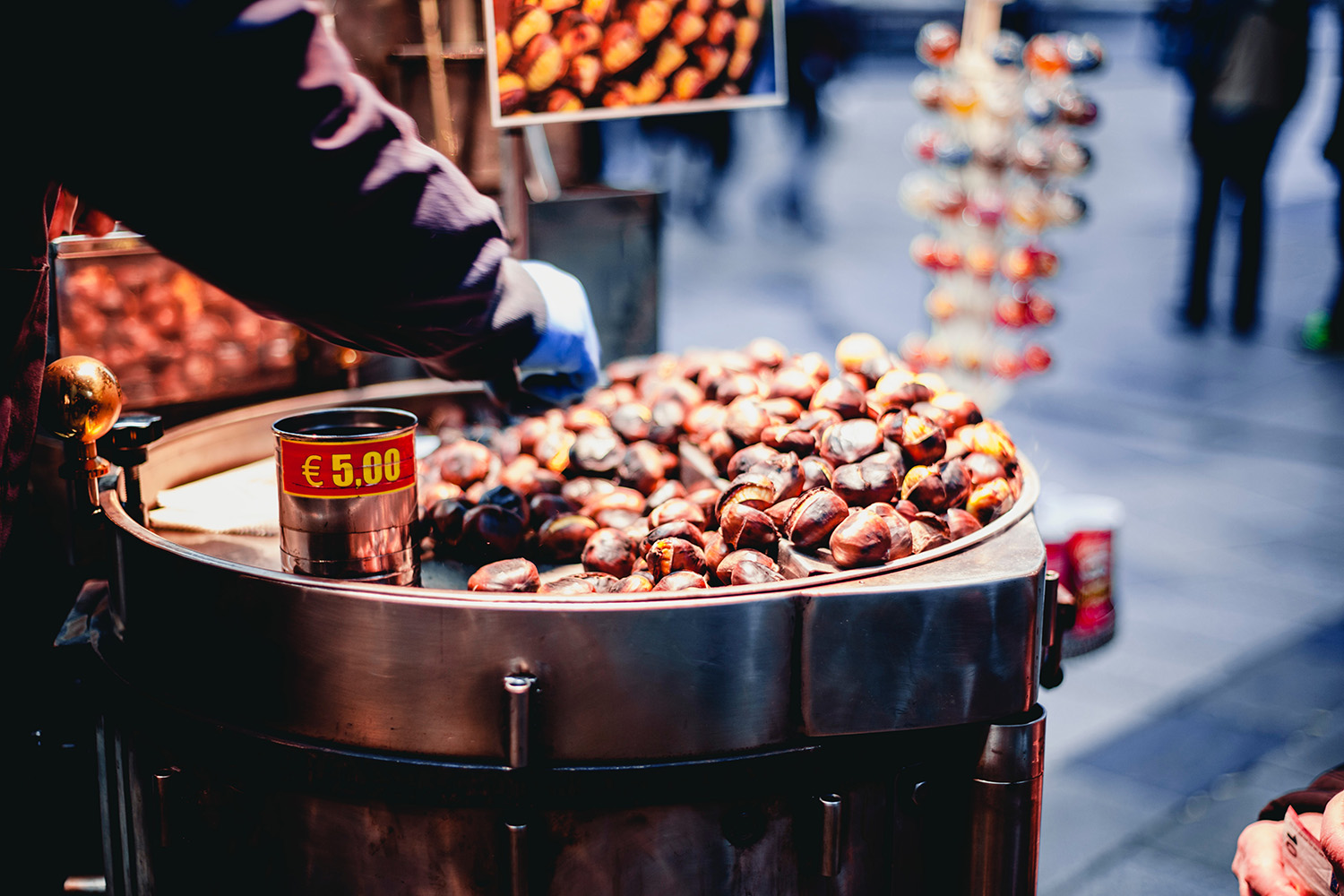
La Castanyada is a Catalan autumn festival celebrated on November 1st with roasted chestnuts, sweet potatoes, and marzipan sweets called panellets, honoring deceased loved ones.
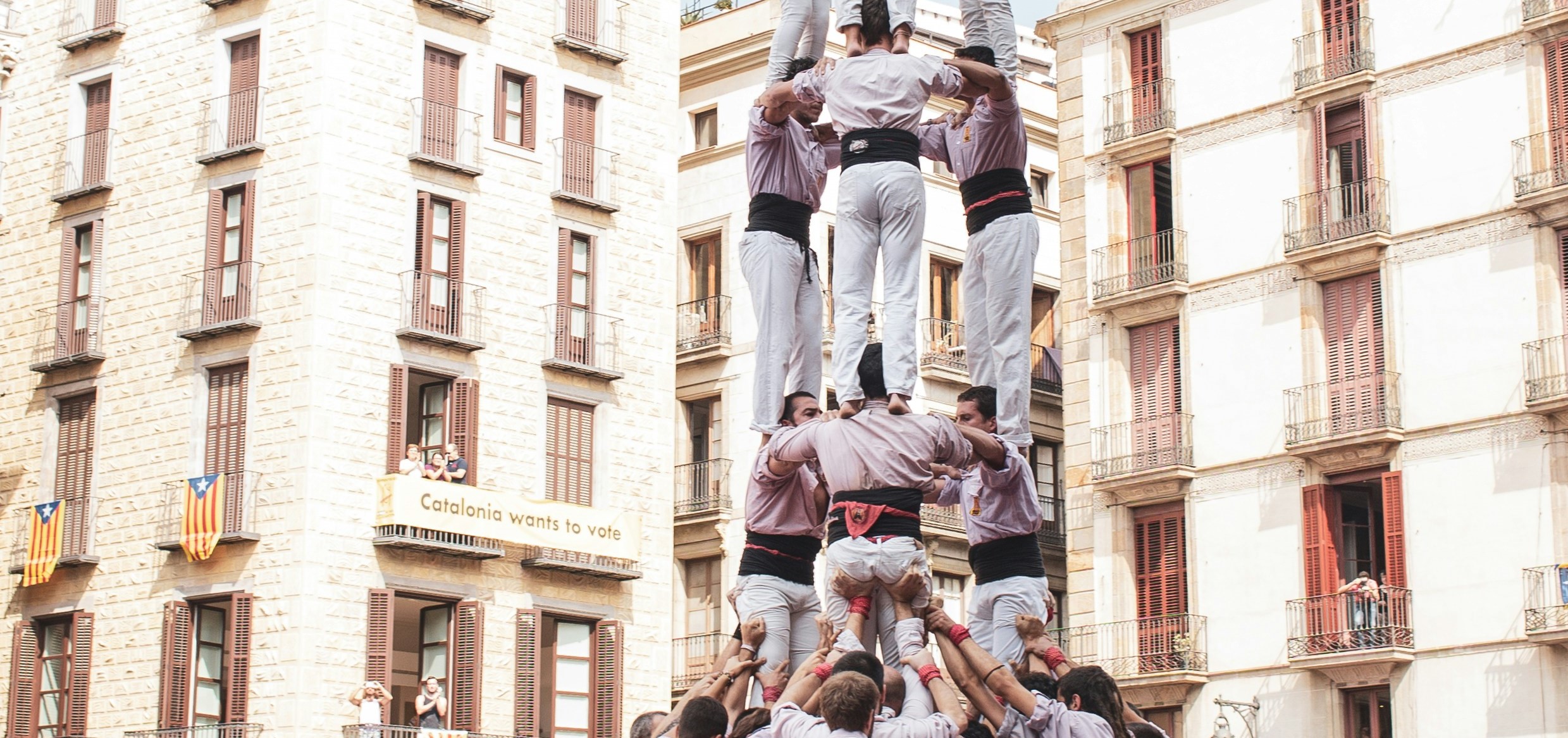
From September 20th to 24th, enjoy Barcelona's popular festival, which features a schedule full of free cultural activities for all ages that will leave you amazed.
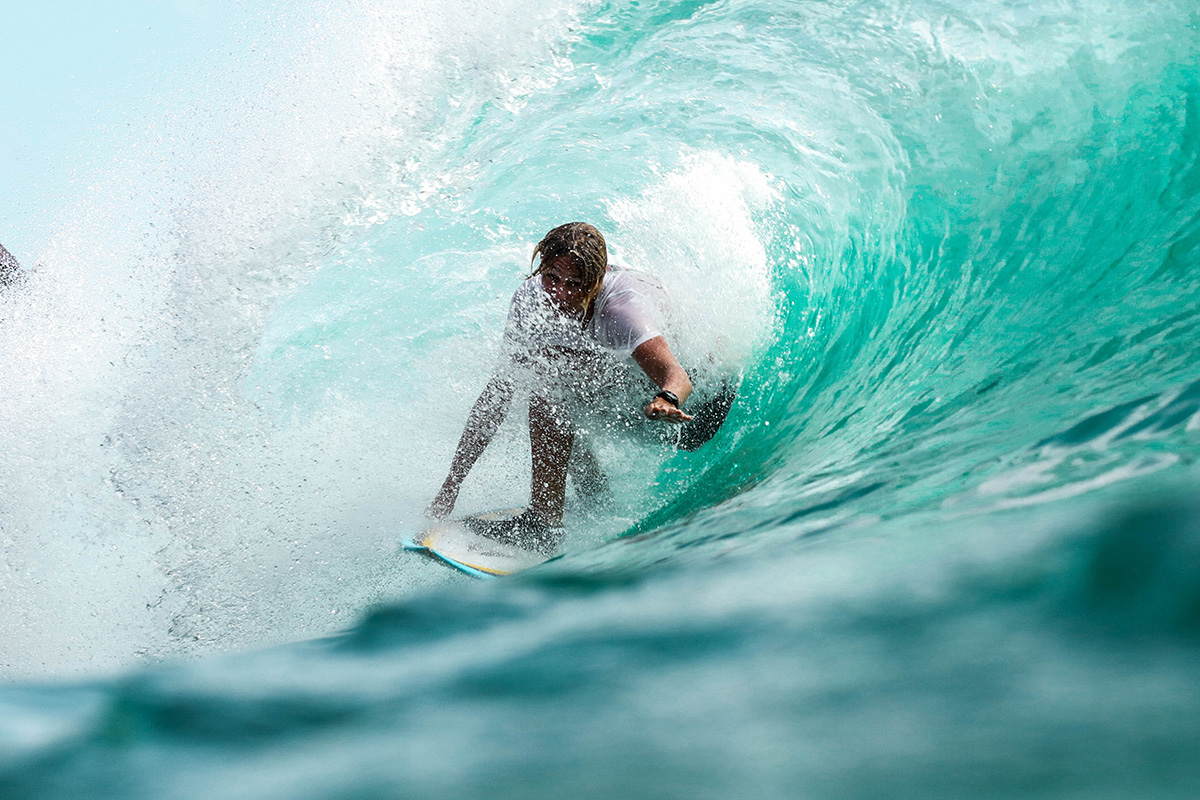
Dive into Barcelona’s best water sports this summer and experience the ultimate aquatic adventure, from surfing to jet skiing along the stunning coastline!
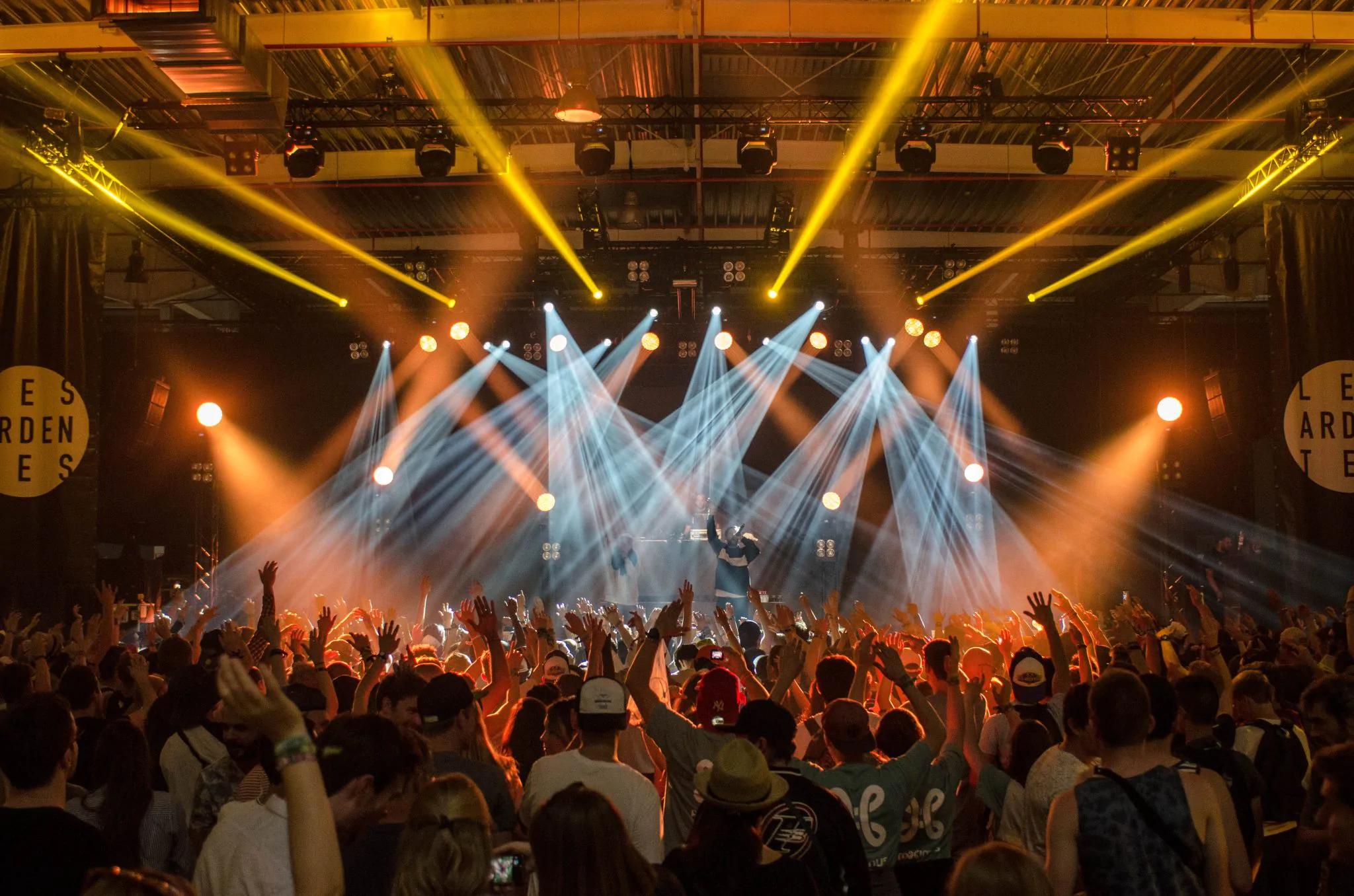
Barcelona comes alive in summer with festivals that blend culture, music, art, and its rich Mediterranean history in a vibrant atmosphere.
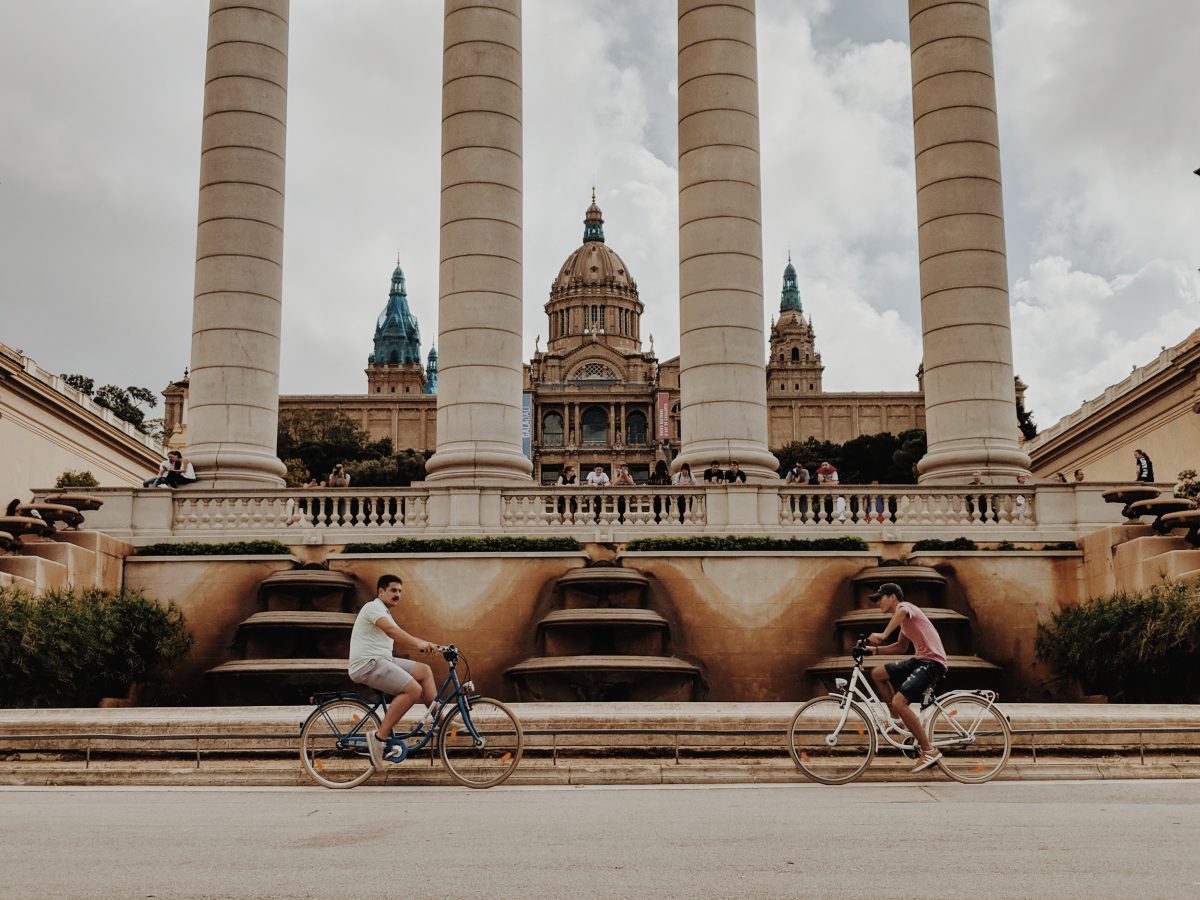
Explore the enchanting city of Barcelona with its vibrant neighbourhoods, breathtaking architecture, and picturesque beaches. In our blog, we invite you to join us on an immersive journey as we navigate the bustling streets and scenic pathways of Barcelona by bike.
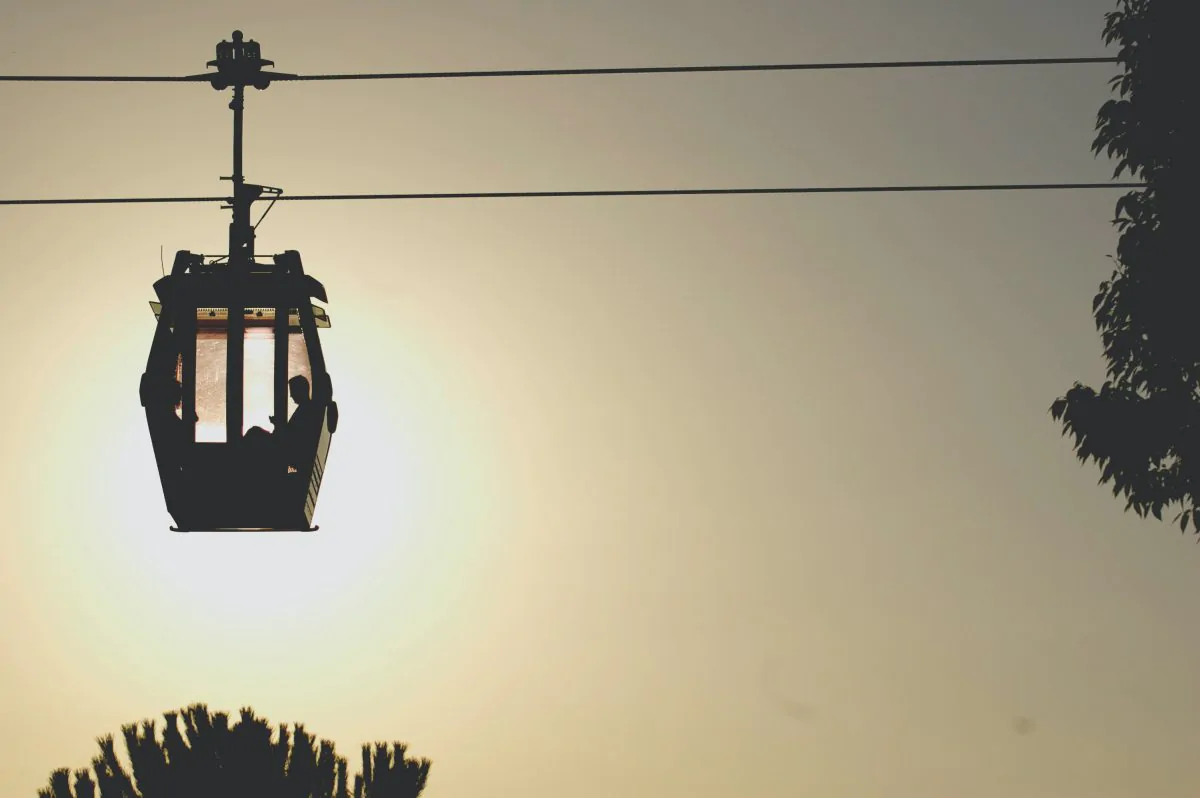
Barcelona’s cable car crosses 1,300 meters (4,265 feet) in ten minutes to reach Montjuïc Hill, taking its passengers on a journey through time with a wonderful landscape to admire.
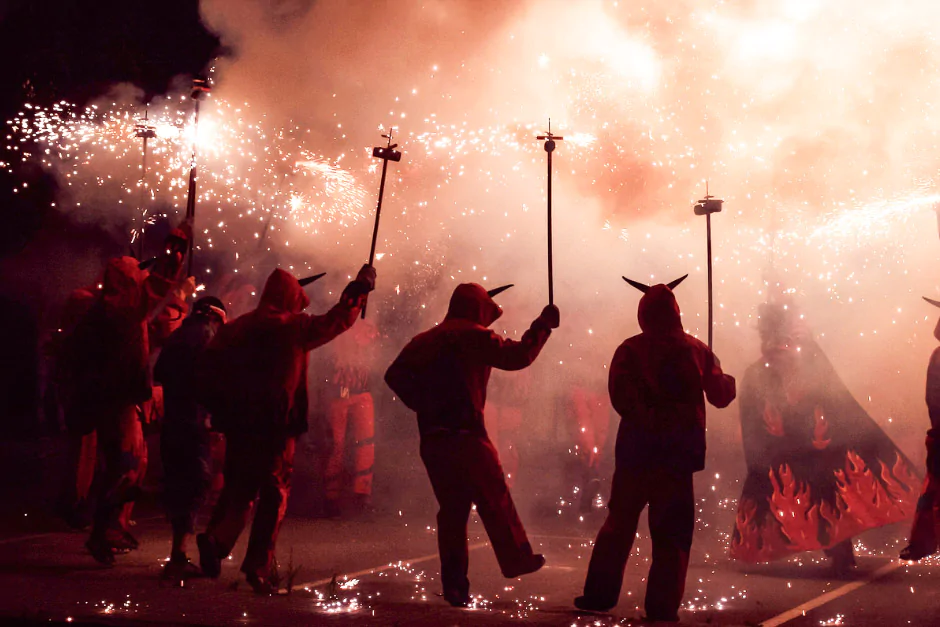
Barcelona, the gem of Catalonia, is known for many things: beautiful beaches, modernist architecture, spectacular cuisine, and its vibrant festival culture. So do not miss next 22nd of September, the opening of La Mercè 2023, and experience Barcelona’s festival with Aspasios.
 Volver al blog